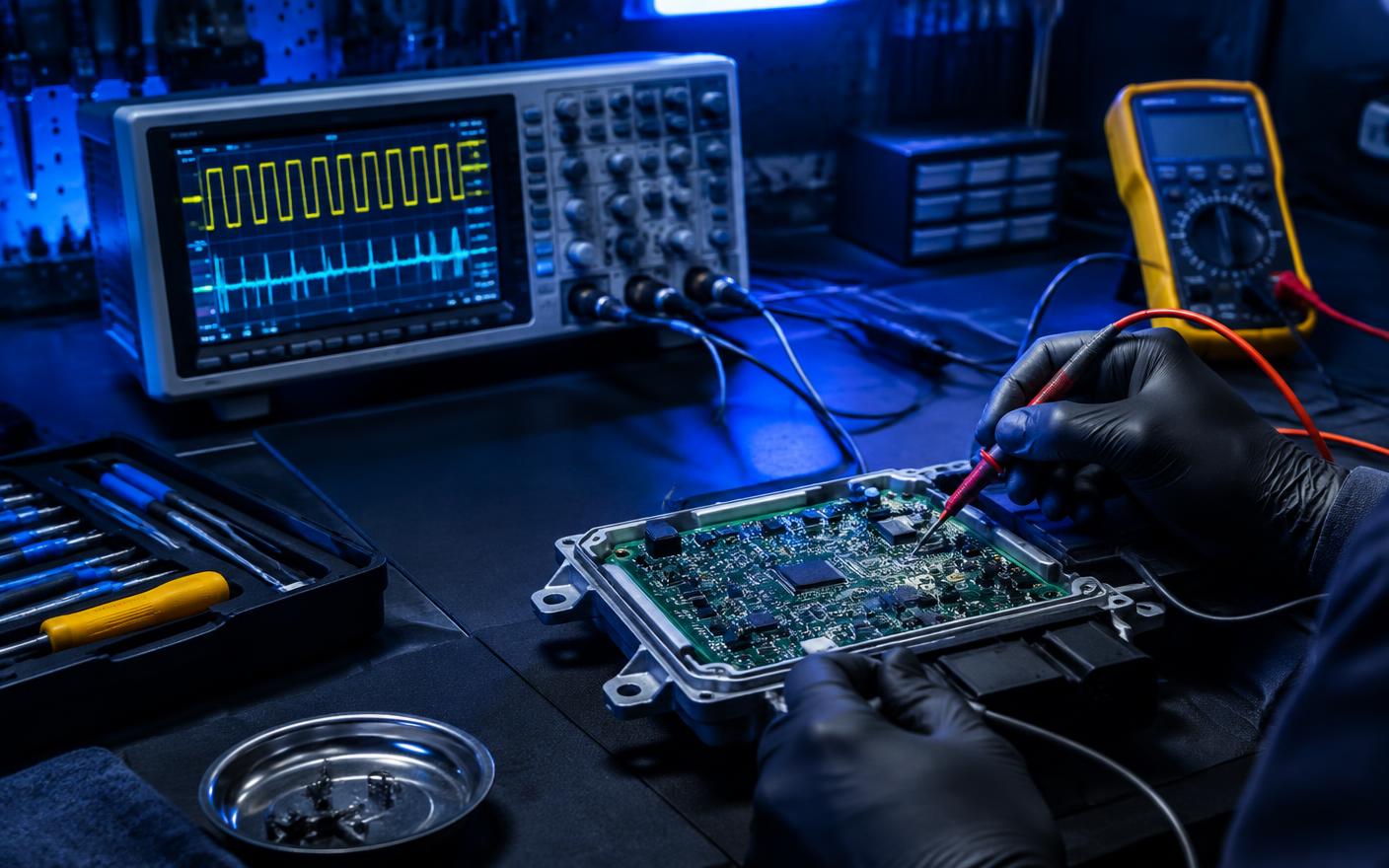
For Shops and Fleets: Mail-In Bench Programming is best approached as a complete vehicle-system question, not simply a part-swap decision. The symptoms, stored faults, part numbers, and security state all help determine the correct service.
This guide explains the practical checks behind module programming, when bench work or remote programming may help, and what information a technician needs to avoid unnecessary replacement costs.
Start with the vehicle, not the replacement part
Control modules sit inside a network. Power, grounds, communication lines, sensors, actuators, software level, and vehicle security data all affect the result. Confirm those basics before condemning a module or ordering programming.
What programming changes
Programming can transfer or configure vehicle-specific information such as the VIN, immobilizer synchronization, option coding, calibration files, and module identity. The exact method depends on the controller, vehicle platform, and condition of the original part.
Important distinction
A software or configuration service does not repair damaged wiring, failed sensors, low system voltage, water intrusion, or mechanical faults. Those conditions must be corrected separately.
A practical diagnostic path
- 1
Scan every control unit and document which modules communicate.
- 2
Verify the symptom and rule out supply-voltage, wiring, fuse, and connector faults.
- 3
Compare the original and donor part numbers, vehicle options, and market region.
- 4
Choose repair, cloning, configuration, or on-car programming based on the test results.
- 5
After installation, clear faults, perform required relearns, and verify operation with a complete post-scan.
What to send for review
Have the full VIN, module part number, scan report, fault codes, and a concise timeline of the failure ready. For cloning or security work, the original and replacement modules may both be required. Proof of ownership is required for immobilizer and key-related services.
The bottom line
For for shops and fleets: mail-in bench programming, good information prevents expensive guesswork. Preserve the original controller, collect a complete scan, and confirm compatibility before buying a donor. That gives a module specialist the best chance of returning a correctly configured part and a predictable installation path.
Need help choosing the right service?
Describe the vehicle and symptoms before shipping anything. Our symptom checker can narrow the likely module path, and a technician confirms the work before it begins.
This guide is educational and is not a confirmed diagnosis. A technician should verify the vehicle, part number, and test results before service.